Visit The Soapmaking Hobby Shop…

The Legend of the Ashes: How Lye Found Its Way Into Soapmaking.
In The Legend of The Ashes, Discover the legend of how lye was found, how wood-ash lye was once made, and how modern sodium hydroxide transformed traditional soapmaking.
LYE-LORE-AND-LEGENDS
Heather | Soapmaking Hobby
10/7/20267 min read


🤎The Legend of the Ashes
🤍This post may contain affiliate links. If you buy through them, I may earn a small commission, just enough to keep the soap kettle warm, at no extra cost to you.
An Old Tale of How Ashes Became Part of Soapmaking Lore
The Legend of Mount Sapo
Where Rain, Ash & Fat Became Soap
There is an old soapmaking tale that has been passed from one generation to another, the story of a little Roman hillside called Mount Sapo.
Whether the mountain ever truly existed as the story tells it, no one can say for certain. But it makes such a lovely soapmaker’s legend that it has found a permanent little place in soapmaking lore.
Long ago, the story says, animals were sacrificed upon Mount Sapo. Fires burned beneath great altars, leaving behind piles of wood ash while melted animal fat collected upon the ground.
Then came the rain.
Rainwater washed down through the ashes and carried the fat with it, creating a slippery mixture that traveled toward the river below.
Along the riverbank, women were washing their household linens.
They began to notice something curious.
Clothing washed in certain places along the river seemed to come cleaner with less scrubbing. The water there felt different, almost slippery beneath their hands, and stubborn dirt seemed easier to loosen from the cloth.
According to the legend, the women eventually discovered that the strange substance washing down from the hillside was responsible.
Without realizing it, nature had brought together some of the same things that generations of soapmakers would later deliberately combine:
Fat.
Wood ash.
Water.
Wood ashes can produce an alkaline solution when water passes through them. Under suitable conditions, alkali and fats can react to form soap. Our ancestors eventually learned to harness this chemistry intentionally, turning an accidental observation into a useful household craft.
And so the tale of Mount Sapo became part of soapmaking folklore.
There is just one little wrinkle in the story.
Historians have not found convincing evidence for the legendary Mount Sapo described in this tale, nor evidence showing that Roman washerwomen discovered soap in exactly this way. Soap and soap like preparations were known in the ancient world long before many versions of the Mount Sapo story would suggest.
From Grandma’s Journal
Some stories belong in the history books, and some belong beside the soap kettle.
The tale of Mount Sapo may be more legend than history, but I think there is still something worth keeping in it.
Soapmaking did not begin with fancy equipment or pretty molds. It grew from people paying attention to the ordinary things around them, ashes from the fire, fats from the kitchen, rainwater, and the need to make something clean.
That sounds an awful lot like the beginning of a good old-fashioned household craft to me.
When I stand over my own soap pot, I think about those early makers.
Today, I measure my lye and oils precisely. They had no digital scales or calculators, yet they understood that alkaline materials could transform fats into soap.
Maybe soapmaking was never one grand discovery, but a long series of small experiments beside countless hearths. Someone experimented. Someone got messy and probably burned and learned to use more caution. And eventually someone taught the next person and on and on the story and lesson gets passed down.
— Soapmaking Hobby🤍


I found this cute storytelling video on the Legend of Mt. Sapo. Maybe true or maybe folklore…


Here is an interesting lesson on the history of lye ash


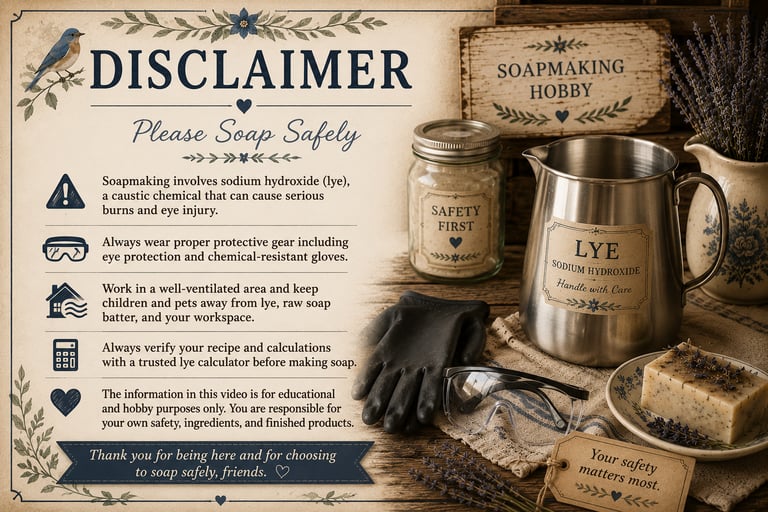
Simple Lye Safe-Handling Checklist
A Little Care Before the Soap Pot
Before working with sodium hydroxide, take a moment to prepare your workspace. Good soapmaking begins with good habits.
☐ Wear safety goggles
Protect your eyes whenever handling dry sodium hydroxide, lye solution, or raw soap batter.
☐ Wear chemical-resistant gloves
Keep your hands and skin protected while measuring, mixing, pouring, and cleaning up.
☐ Cover exposed skin
Wear appropriate clothing and closed-toe shoes to help protect against accidental splashes.
☐ Work in a well-ventilated area
Avoid breathing the vapors produced when sodium hydroxide is first mixed with water.
☐ Keep children and pets away
Your lye-mixing and soapmaking area should be a controlled workspace without distractions.
☐ Use lye-safe containers and utensils
Choose materials suitable for sodium hydroxide. Avoid aluminum, which reacts with lye.
☐ Weigh everything carefully
Use an accurate digital scale and a properly calculated soap recipe. Never guess the amount of sodium hydroxide.
☐ Add lye to the liquid, not liquid to the lye
Slowly add sodium hydroxide to the recipe’s liquid while following the appropriate procedure for that particular liquid.
☐ Expect the solution to become very hot
Mixing sodium hydroxide with water releases heat. Use a heat-resistant, lye-safe container in a secure location.
☐ Never leave lye unattended
Clearly identify the container and keep it somewhere it cannot be mistaken for food or drink, spilled, or reached accidentally.
☐ Handle raw soap batter with care
Fresh soap batter is still caustic. Keep your gloves and eye protection on while pouring the soap and cleaning your equipment.
☐ Know what to do if an accident happens
For skin exposure, immediately rinse with plenty of running water and remove contaminated clothing. For eye exposure, rinse continuously with clean water and seek urgent medical guidance. Follow the sodium hydroxide manufacturer’s Safety Data Sheet and local poison-control or emergency guidance.
🌿 Grandma’s Soap Shed Reminder
Measure carefully.
Protect your eyes and hands.
Keep your workspace quiet and prepared.
And never become so comfortable with lye that you stop treating it with respect.
A careful soapmaker is a happy soapmaker.


If you want to nerd out a bit, check out this video on how lye is made in our modern day times.


✨FAQ Sodium Hydroxide & Modern Soapmaking
✨What is sodium hydroxide?
Sodium hydroxide, commonly called lye or NaOH, is a strong alkali used to make traditional solid bar soap. When properly calculated and combined with fats or oils, it begins the chemical reaction called saponification.
✨Why does soap need sodium hydroxide?
True soap is created through a reaction between fats or oils and an alkali. For traditional bar soap, that alkali is usually sodium hydroxide. Without an alkali, the oils cannot undergo saponification and become soap.
✨Is there lye left in finished soap?
A properly formulated and fully saponified soap should not contain excess free sodium hydroxide. Soapmakers carefully calculate the amount of lye required for the oils in a recipe, often leaving a portion of the oils unsaponified through what is called a superfat.
✨Is sodium hydroxide the same as old-fashioned wood-ash lye?
Not exactly. Traditional hardwood-ash lye contained primarily potassium-based alkaline compounds and could vary considerably in strength. Modern sodium hydroxide is standardized, allowing soapmakers to calculate recipes much more accurately.
✨What does NaOH mean?
NaOH is the chemical formula for sodium hydroxide: sodium (Na), oxygen (O), and hydrogen (H).
✨Does sodium hydroxide disappear during soapmaking?
It is better to say that it reacts rather than simply disappears. During saponification, sodium hydroxide reacts with the fats and oils to form new substances, primarily soap and glycerin.
✨Why does the lye solution become hot?
Dissolving sodium hydroxide in water releases a considerable amount of heat. This is an exothermic reaction, which is why a freshly mixed lye solution can become very hot.
✨Can I substitute one type of lye for another?
Not directly. Sodium hydroxide (NaOH) and potassium hydroxide (KOH) require different calculations. NaOH is generally used for hard bar soaps, while KOH is commonly used for liquid and soft soaps. A recipe should always be calculated for the specific alkali being used.
✨Why does every oil require a different amount of lye?
Different fats and oils have different fatty-acid compositions and therefore different saponification values. That means the amount of sodium hydroxide needed to turn one ounce of olive oil into soap is not necessarily the same amount needed for one ounce of coconut oil or tallow.
✨Can I measure sodium hydroxide with cups or spoons?
No. Soapmaking ingredients, especially sodium hydroxide, should be weighed accurately, not measured by volume. A dependable digital scale and a properly calculated soap formula are important parts of safe soapmaking.
✨Is sodium hydroxide dangerous before it becomes soap?
Yes. Sodium hydroxide is highly caustic and can cause serious chemical burns and eye injury. Appropriate protective equipment, suitable containers, good ventilation, careful handling, and a lye-safe workspace are essential.


Shopping List:
🤍This post may contain affiliate links. If you buy through them, I may earn a small commission, just enough to keep the soap kettle warm, at no extra cost to you.
Mason jars for fragrance oils
Labels (round)
Lye Pitcher (Stainless Steel)
Wood & Silicone purple Soap Mold
Large Wide Soap Mold 5 lb
Stick Blender (lightweight)
Black Nitrile Gloves
Apron(any with pockets will do)
Solid Silicone Spatulas(heat safe)
Soap Pot(Double Boiler)
Curing Rack(starter)
Wooden Trays (for curing)
Wooden Crates (for carrying)
Grinder(I like this for whole oats)
Dehydrator (for citrus slices)
Greaseproof wrap:




🤍Choose your next soap journal entry…
✨ Charred Rose Bouquet- floral elegance
✨Huckleberry Harvest Vegan- berry charming
✨Blueberry Lane-a blueberry scented- farmhouse bar


From My Little Soap Corner 🤍
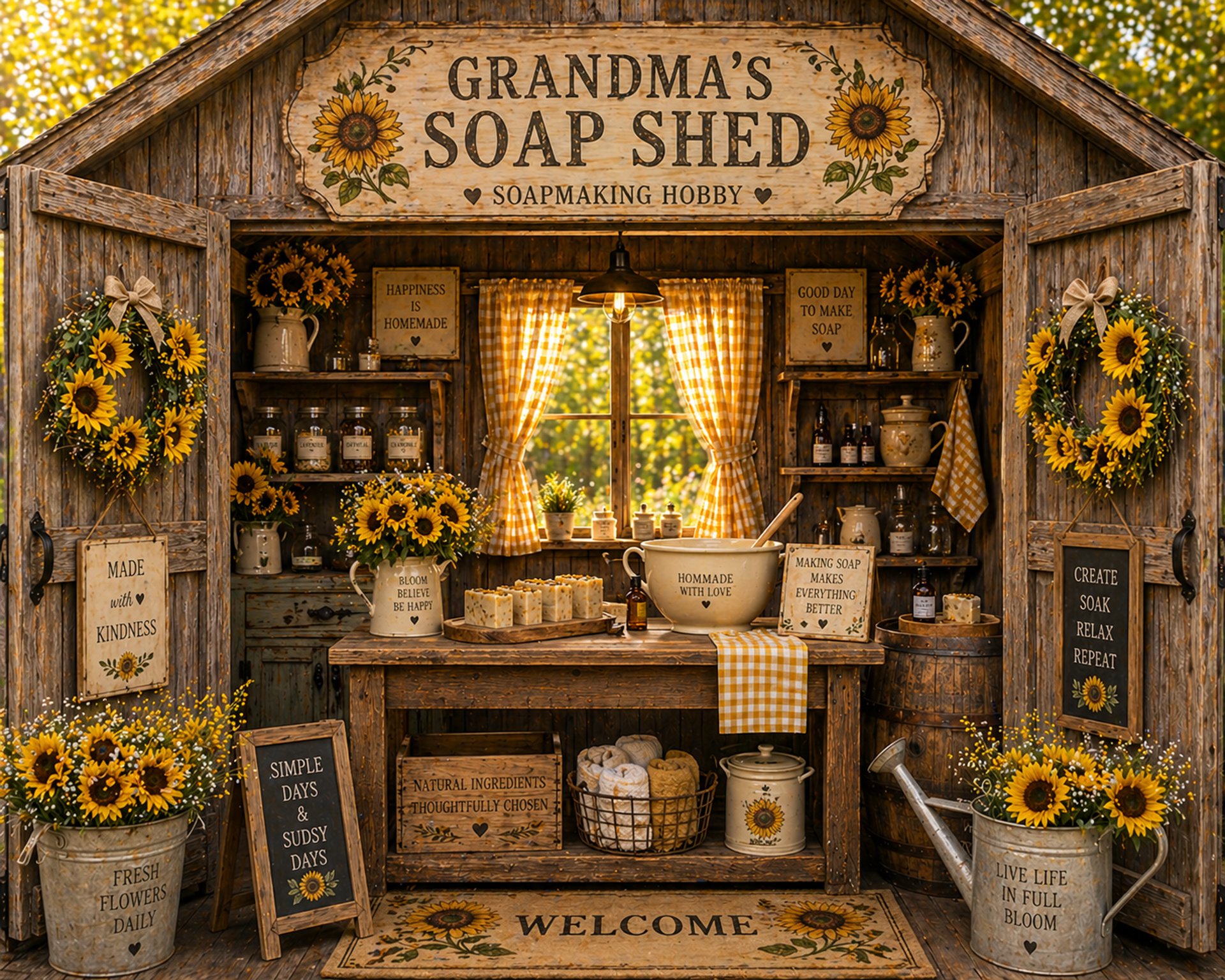
I make each bar in a cozy little 4x12 foot workshop, just a simple setup and a love for soapmaking. Some of the backgrounds and scenes you see are AI-created or enhanced to reflect the warm, rustic feel I imagine for my soap shed. I love creating handmade soap and digital soap-making journals and scenes. This journal is little storytelling nostalgia. Join me in a world of soap-making imagination. - Heather 🌼🫧
Privacy Policy • Cookie Policy • Terms & Conditions • Affiliate Disclosure • AI Disclosure
🍃 Handmade stories, soapmaking recipes & journals from the Soap Shed.
© 2026 Soapmaking Hobby. All Rights Reserved.