Visit The Soapmaking Hobby Shop…

A Beginner's Guide to Lye Safety and Soap-Making: Grandma’s Journal
New to soapmaking? Learn essential lye safety tips, proper handling techniques, protective equipment, and beginner-friendly advice before making your first batch of cold process soap.
SOAP-MAKING SAFETY AND EDUCATION
1/2/20267 min read
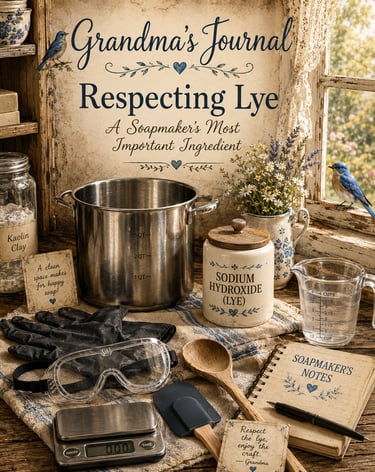
🤍 Grandma’s Journal
🤍This post may contain affiliate links. If you buy through them, I may earn a small commission, just enough to keep the soap kettle warm, at no extra cost to you.
Respecting Lye:
If there’s one ingredient that makes new soapmakers a little nervous, it’s lye. Also known as as Sodium Hydroxide, Caustic Soda, Soda Ash, and NaOH.
I remember feeling the very same way.
The word itself sounds intimidating, but the truth is that every beautiful bar of true cold process or hot process soap begins with lye. Without it, oils would simply remain oils, and soap would never be made.
During the soapmaking process, lye and oils work together in a wonderful little bit of chemistry called saponification. As the soap cures, the lye is used up as it transforms the oils into gentle, cleansing soap. When your recipe is well balanced and fully cured, there is no active lye left in the finished bar.
That doesn’t mean lye should ever be taken lightly.
Before it becomes soap, lye deserves our full attention and respect. A little care goes a long way toward keeping every batch safe and enjoyable.
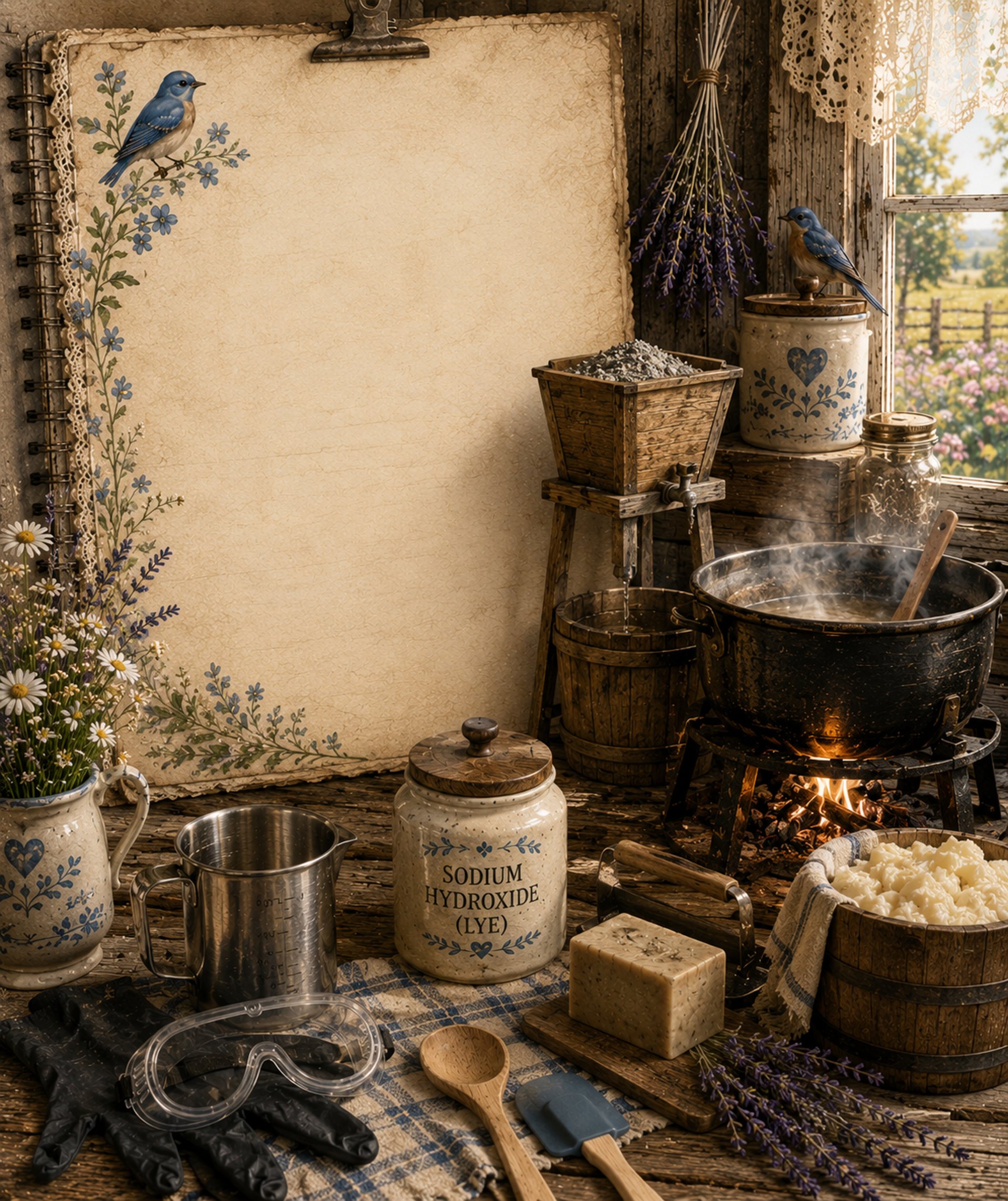
Here are a few habits I’ve learned over the years:
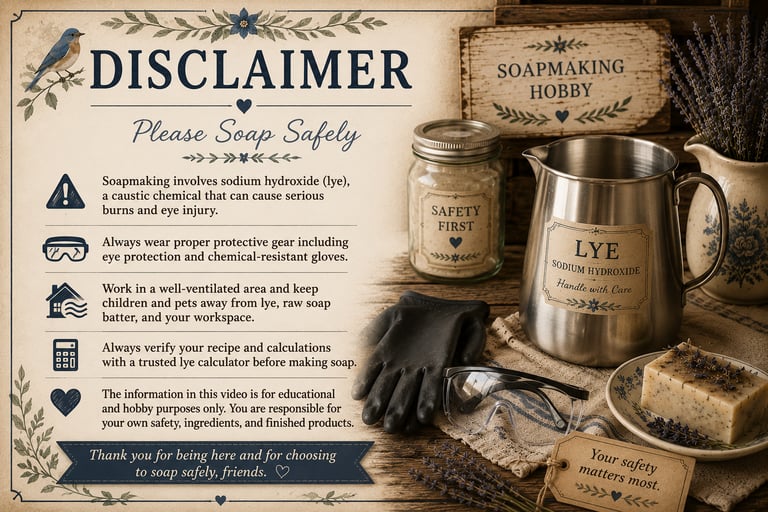
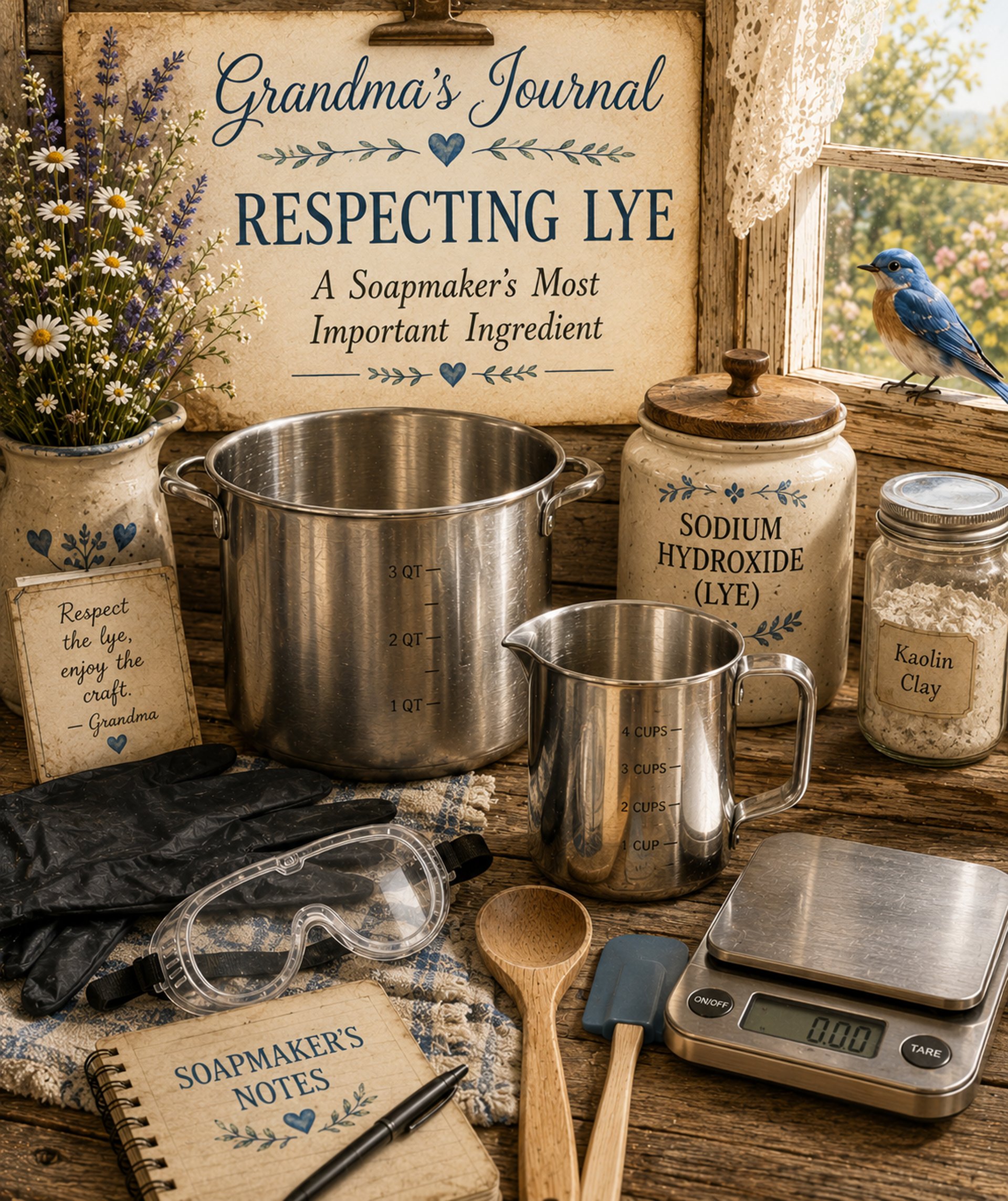
🤍Wear safety glasses or goggles to protect your eyes, lye can cause blindness so take caution.
🤍Wear gloves whenever handling lye or fresh soap batter.
🤍Mix your lye solution in a well-ventilated area.
🤍Always add lye to water, never ever pour water onto lye or you will have a volcano on your hands.
🤍Use heat-safe containers made of large stainless steel pitchers or appropriate plastic.
-#5 PP (Polypropylene)
-#2 HDPE (Density Polyethylene)
Here is a variety set heat safe with leak proof lids
-Avoid Aluminum
🤍Keep children and pets away from your workspace while making soap.
🤍Clearly label your lye and store it in a cool, dry place, safely out of reach.
🤍If lye comes into contact with your skin, rinse the area immediately with plenty of cool running water.
🤍Keep Poison Control on Hand # 800-222-1222 This is the U.S. version, become familiar with poison control numbers in your own region.
🤍Never breathe in the fumes or you will get to coughing and cackling like no body’s business.
One of the best lessons Grandma could pass along is this:
Don’t fear lye, but do respect it.
Measure carefully, work patiently, and never rush through a batch. Soapmaking is meant to be a peaceful hobby, and careful preparation makes it both safe and enjoyable.
Every experienced soapmaker once mixed their very first lye solution. With a little knowledge and a healthy respect for the process, you’ll soon discover that making soap becomes one of the most rewarding crafts you’ll ever learn.
Now, put on those gloves, tie up your apron, gather your ingredients, and enjoy creating something beautiful with your own two hands.
— Soapmaking Hobby 🤍

If you’ve never worked with lye before, I recommend taking a little time to learn about proper safety and handling before you get to mixing your first batch. Lye is nothing to be frightened of, but it is something to be understood, handled with care, and treated with respect. Here is a Lye Data Sheet from Nurture Handmade, whom I have personally had great results with.
I’ve included a couple of helpful YouTube videos from experienced folks in the soapmaking world. Each takes a slightly different approach to lye safety, and together they offer a thorough look at the precautions every soapmaker ought to know. I’ve found these resources to be a wealth of soapmaking knowledge, with plenty of helpful tutorials to explore. I’d say they’re well worth their salt in soap. I am not affiliated or endorsed by any of the soap companies, I just feel that they are very helpful resources.🤍🫧
We’ll begin with this helpful video from Bramble Berry: Guide to Lye Safety.

Next up is a very informative video from Royalty Soaps, Lye Prep Safety 101. It’s another helpful look at safely preparing and working with lye, and is well worth a watch before you get to stirring your first soap pot. 🤍🫧

And one more for the soap shelf—a wonderful video from Elly’s Everyday Soap Making, Soap Safety Essentials. It’s full of helpful, practical advice and offers a thoughtful look at the safety habits every soapmaker ought to keep close at hand. 🤍🫧🍃
I’ve been making soap for years and years, and I must tell you, sitting down to watch these videos was a mighty good reminder of just how seriously we ought to take lye safety.
You see, when we’ve done something over and over again, it’s easy to grow comfortable. Our hands know the motions, the soap pot feels familiar, and before long, we may not be quite as watchful as we once were. These videos were a good refresher for me and a gentle reminder to never get too comfortable where lye is concerned. I even learned a thing or two myself, and I’ve been stirring soap pots for a good many years. There’s always something new to learn in this old craft. 🤍
Now, if you’re still feeling a bit intimidated by the thought of working with lye, but you’ve got a real hankering to make some soap, let me offer you another suggestion: melt-and-pour soapmaking.
Truth be told, if I still had babies and little ones underfoot, I’m not so sure I’d be making soap the old-fashioned way myself. There are seasons for everything, and sometimes the safer, simpler road is the wiser one.
Melt-and-pour is just about what it sounds like. You melt the prepared soap base, stir in your colors and fragrance, pour it into a mold, and before you know it, you’ve made yourself a beautiful batch of soap, all without measuring, mixing, or directly handling caustic lye.
You see, melt-and-pour soap has already gone through a process called saponification. Yes, lye was used to make the soap in the first place, but when properly made, the lye has reacted with the oils during saponification and is not left as active, free lye in the finished soap base you’ll be handling.
Melt-and-pour can even be a lovely soapmaking activity to enjoy with children, with a grown-up doing the heating and supervising closely, of course. Melted soap base and hot containers can still cause burns, just as anything heated can, so we mustn’t toss all our good sense out the soap-shed window. 🤍
But for someone who isn’t quite ready to work with lye, or for a house with little feet running under the table, melt-and-pour may be a mighty fine place to begin. 🫧🍃
Just a friendly reminder from the soap shed: I’m writing from here in the United States, and laws, rules, and regulations can differ from one place to the next. What applies in my little corner of the world may not be the same where you call home.
Before making, selling, labeling, or sharing your handmade soap, take a little time to learn the laws and requirements that apply where you live. Local, state, provincial, and national rules may vary, and it’s always best to check with the proper authorities for the most current information.
A good soapmaker learns her oils and lye, but a wise one learns the rules of her own neck of the woods, too.
-Soapmaking Hobby 🤍🫧🍃

Shopping List:
🤍This post may contain affiliate links. If you buy through them, I may earn a small commission, just enough to keep the soap kettle warm, at no extra cost to you.
Mason jars for fragrance oils
Labels (round)
Lye Pitcher (Stainless Steel)
Wood & Silicone purple Soap Mold
Large Wide Soap Mold 5 lb
Stick Blender (lightweight)
Black Nitrile Gloves
Apron(any with pockets will do)
Solid Silicone Spatulas(heat safe)
Soap Pot(Double Boiler)
Curing Rack(starter)
Wooden Trays (for curing)
Wooden Crates (for carrying)
Grinder(I like this for whole oats)
Dehydrator (for citrus slices)
Greaseproof wrap:


⭐️Frequently Asked Questions About Lye Safety
⭐️Is lye dangerous?
Lye is a caustic alkali and should always be handled with care and respect. When used properly with the right safety equipment and good soapmaking practices, it can be handled safely. The key is to never become careless or rush the process.
⭐️Can I make cold process soap without lye?
No. Every true bar of cold process soap begins with lye. During a process called saponification, the lye reacts with the oils to create soap. When a recipe is properly formulated and fully cured, there should not be active, free lye remaining in the finished bar.
⭐️Is melt-and-pour soap made with lye?
Yes. Melt-and-pour soap was originally made using lye, but the saponification process has already been completed before you purchase the soap base. That means you are not measuring or handling lye yourself, making it a wonderful option for beginners or families.
⭐️What safety equipment should I wear when making soap?
At a minimum, I recommend safety glasses or goggles, chemical-resistant gloves, and aprons, long sleeves, closed-toe shoes, and working in a well-ventilated area. Keep children and pets away from your workspace while handling lye.
⭐️Should I mix lye with water or water with lye?
Always add lye to the water, never pour water onto dry lye. Adding water directly to lye can cause a dangerous reaction and increase the risk of splashing.
⭐️Can I use my regular kitchen utensils?
It’s best to have a set of utensils, bowls, pitchers, and tools that are used only for soapmaking. Stainless steel, heat-safe silicone, and #5 polypropylene plastic are good choices. Avoid aluminum, as lye reacts with it.
⭐️What if I spill lye?
Stay calm. Keep others away from the area, follow the manufacturer’s safety instructions, and clean the spill while wearing your protective equipment. For skin exposure, rinse immediately with cool running water for 15 minutes and seek medical attention if the exposure is severe or symptoms persist.
⭐️How long should homemade soap cure?
Most cold process soaps benefit from curing for 4 to 6 weeks, although some recipes improve with even longer cure times. A proper cure allows excess water to evaporate, resulting in a harder, longer-lasting, and milder bar of soap.


🤍Choose your next soap journal entry…
✨ Charred Rose Bouquet- floral elegance
✨Huckleberry Harvest Vegan- berry charming
✨Charcoal and Cream-a country melody


From My Little Soap Corner 🤍
I make each bar in a cozy little 4x12 foot workshop, just a simple setup and a love for soapmaking. Some of the backgrounds and scenes you see are AI-created or enhanced to reflect the warm, rustic feel I imagine for my soap shed. I love creating handmade soap and digital soap-making journals and scenes. This journal is little storytelling nostalgia. Join me in a world of soap-making imagination. - Heather 🌼🫧
Privacy Policy • Cookie Policy • Terms & Conditions • Affiliate Disclosure • AI Disclosure
🍃 Handmade stories, soapmaking recipes & journals from the Soap Shed.
© 2026 Soapmaking Hobby. All Rights Reserved.