Visit The Soapmaking Hobby Shop…

Blueberries and Cream Soap- Vegan Cold ProcessSoap with Recipe
Why Did My Purple Soap Turn Green? The Chemistry Behind Blueberry Soap Learn how to make Blueberries & Cream vegan cold process soap with coconut milk, blueberry purée, and creamy plant-based oils. Includes a printable recipe, step-by-step instructions, soapmaking tips, color-changing chemistry, and Grandma’s Journal inspiration.
VEGAN HANDMADE SOAP
Heather | Soapmaking Hobby
8/7/20267 min read


🫐 Grandma’s Journal
🤍This post may contain affiliate links. If you buy through them, I may earn a small commission, just enough to keep the soap kettle warm, at no extra cost to you.
The Curious Case of the Color-Changing Soap
One of my favorite things about making soap is that it still manages to surprise me.
When I stirred the beautiful blueberry purée into the oils, it looked just as I’d hoped, a soft, rich purple, reminding me of berries freshly picked from the garden. The fragrance smelled sweet and inviting, and I imagined the finished bars carrying that lovely blueberry hue.
Then came the lye.
Almost as soon as the two met, the batter began its little magic trick.
The purple slowly disappeared and was replaced by a surprising shade of green. For just a moment, it looked as though I had somehow wandered into a recipe for fresh herbs instead of blueberries! Before long, the green softened into warm golden-orange tones, leaving almost no trace of the original berry color.
It wasn’t a mistake at all.
Blueberries owe much of their beautiful purple color to natural plant pigments called anthocyanins. These pigments are wonderfully sensitive to pH. In acidic foods like blueberry jam or pie filling, they appear red, purple, or blue. But cold process soap is one of the most alkaline environments a natural ingredient can encounter.
When the highly alkaline lye solution enters the mix, those delicate pigments change their chemical structure. As they do, the colors shift, sometimes through blues and greens before settling into tan, brown, or golden shades. Different fragrances can also encourage discoloration, especially if they contain natural vanillin compounds or other ingredients that darken during saponification.
It always amazes me that the soap batter is quietly teaching a little chemistry lesson while we stir.
Every swirl tells the story of molecules rearranging themselves, oils transforming into soap, and nature responding to a completely different environment than the one those blueberries knew on the bush.
I’ve learned not to judge a loaf by its first color.
Soap has a way of keeping its secrets until the very end.
And perhaps that’s part of its charm.
So the next time your beautiful purple batter suddenly turns green then even a warm orange, don’t be discouraged. Instead, smile and remember that you’re watching chemistry unfold right before your eyes.
Sometimes the prettiest part of soapmaking isn’t the color we expect…
…it’s watching nature surprise us.
-Soapmaking Hobby 🤍🫐

Like🖤Share🖤Subscribe
I am loving this tall and skinny soap mold that you can get here.


Vegan Cold Process Soap Recipe
65oz Batch
Olive Oil 40% 26.00 oz
Coconut Oil (76°) 25% 16.25 oz
Palm Oil 25% 16.25 oz
Avocado Oil 5% 3.25 oz
Castor Oil 5% 3.25 oz
Lye Solution
Distilled Water — 16.33 oz
Sodium Hydroxide (NaOH) — 9.16 oz
Additives
2 Tablespoons Kaolin Clay
2 Tablespoons Ground Oats
2-4Tablespoons
*(Prepare ahead)Blueberry Purée
Boil down 1/2 cup water with 1 cup fresh rinsed blueberries -whole or blended- till soft about 5 mins, let cool and refrigerate
2 ounces Coconut Milk
Blueberry Fragrance Oil
Method
Step 1
Put on your safety equipment and prepare your mold.
Slowly sprinkle the sodium hydroxide into the distilled water while stirring until completely dissolved. Allow the lye solution to cool to approximately 90–110°F.
Step 2
Melt the solid oils and combine them with the liquid oils. Allow the oils to cool to approximately 90–110°F.
Step 3
Add the Kaolin Clay, Colloidal Oats, Blueberry Purée, and Coconut Milk directly to the melted oils.
Blend until the mixture is smooth and evenly incorporated.
Step 4
Slowly pour the cooled lye solution into the oils.
Stick blend until the batter reaches a stable emulsion.
Step 5
Add the Titanium Dioxide, Blue Mica, and Blueberry Fragrance Oil.
Continue blending until the soap reaches a light trace.
Step 6
Pour the soap into your prepared mold.
Tap the mold gently to release any trapped air bubbles and texture the top if desired.
Step 7
Cover the mold and insulate if desired.
Allow the soap to remain in the mold for 24–48 hours before unmolding.
Step 8
Cut into bars and cure in a well-ventilated area for 4 weeks before using.
💛This is my favorite soap calculator-test and create your own favorite recipes


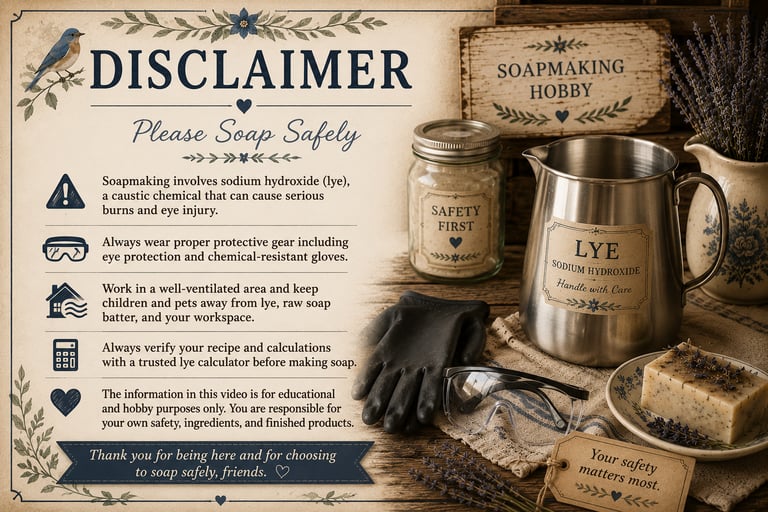
I’m so glad you stopped by. 🤍 Soapmaking is a wonderfully enjoyable and rewarding craft, but safety should always come first.
If you’ve never worked with lye before, I encourage you to take a little time to become familiar with proper lye safety and handling before you begin. You may want to start with my post, A Beginner’s Guide to Lye Safety and Soap-making, where we’ll walk through the basics and important safety guidelines together.
A little knowledge and preparation go a long way toward making your time at the soap pot both safe and enjoyable. 🫧🌿
🤍(Disclosure )This post may contain affiliate links. If you buy through them, I may earn a small commission — just enough to keep the soap kettle warm — at no extra cost to you.
🔗 Tools & Supplies I Use
These are the basics I reach for every time:
Stainless or enamel soap pot/bowl
Wooden mold with silicone liner-Large Tall and Skinny or
Small tall and skinny
Safety Goggles for over Glasses
Kraft labels for Mason Jars
Work Apron with pockets
Electric Kettle -to melt hard oils in a hot water bath
Parchment paper (if using wooden mold)
💛Optional extras: for a rustic sink-side look
Wooden soap deck to help bars dry between uses
💛Optional but lovely:
Soap cutter & molds
-perfect for beginners
Wooden multi bar cutter
Soap stamp
— Soapmaking Hobby 🫧💛


Frequently Asked Questions
Blueberries & Cream Vegan Cold Process Soap
🫐 Why does the soap batter change from purple to green and then orange?
This is one of the most fascinating parts of this recipe! Fresh blueberry purée contains natural pigments called anthocyanins. These pigments react to the highly alkaline environment created by the lye solution. As the pH changes, the colors naturally shift from purple to green and then to warm golden or orange tones. It’s perfectly normal and a fun little chemistry lesson happening right in your soap pot.
🫐 Will my finished soap be purple?
Not from the blueberry purée alone.
Most natural fruit purées lose their original color during saponification because of the high pH. If you’d like a blue or purple finished soap, cosmetic-grade micas or purple clays are the best choice. In this recipe, the blueberry purée is added more for its natural appeal than for lasting color.
🫐 What does the blueberry purée add to the soap?
Blueberry purée contributes natural sugars and tiny speckles that give the soap a rustic, handcrafted appearance. While many soapmakers enjoy including fruit purées, most of the fruit’s vitamins are affected by the high-pH environment, so they’re not expected to remain intact in the finished soap. The purée is primarily included for its aesthetic appeal and the unique soapmaking experience it creates.
🫐 Why is coconut milk used?
Coconut milk helps create a wonderfully creamy, luxurious lather and contributes to the smooth, silky feel of the finished bars. It pairs beautifully with the gentle conditioning oils in this recipe.
🫐 Can I substitute another milk?
Yes.
Goat milk, oat milk, almond milk, or heavy cream can all be used, although each may slightly change the final color and feel of the soap.
🫐 Why are colloidal oats added?
Colloidal oats Or Ground Oats, give the bars a silky feel and add a gentle, creamy quality to the lather. They also create the tiny natural speckles that complement the rustic farmhouse appearance of this soap.
🫐 What does kaolin clay do?
Kaolin clay helps anchor fragrance, adds a silky glide to the lather, and contributes to a smooth, creamy texture in the finished soap.
🫐 Can I use frozen blueberries instead of fresh?
Yes.
Simply thaw them first and blend them into a smooth purée before measuring the amount needed for the recipe.
🫐 When should I add the blueberry purée and coconut milk?
For this recipe, both the blueberry purée and coconut milk are blended into the cooled melted oils before adding the lye solution. This helps distribute them evenly throughout the batter.
🫐 Why should I soap at lower temperatures?
Keeping both the oils and lye solution around 90–110°F helps reduce the chance of overheating, especially when using ingredients that contain natural sugars, such as fruit purées and milk.
🫐 How long should this soap cure?
Although the soap can usually be unmolded within 24–48 hours, allow it to cure for at least 4 weeks. During this time, excess water evaporates, the bars become harder, and the lather improves significantly.
🫐 Is this recipe beginner friendly?
Yes!
As long as you’re comfortable working safely with sodium hydroxide (lye), this is a wonderful beginner-to-intermediate recipe. If you are brand new to soapmaking , I recommend that you visit this blog post here, before moving on. The design is simple, the ingredients are easy to find, and you’ll even get to witness the fascinating color changes that make soapmaking such an enjoyable craft.


🤍Choose your next soap journal entry…
✨ Charred Rose Bouquet- floral elegance
✨Huckleberry Harvest Vegan- berry charming
✨Bluebird Lane-a blueberry scented- farmhouse bar
From My Little Soap Corner 🤍
I make each bar in a cozy little 4x12 foot workshop, just a simple setup and a love for soapmaking. Some of the backgrounds and scenes you see are AI-created or enhanced to reflect the warm, rustic feel I imagine for my soap shed. I love creating handmade soap and digital soap-making journals and scenes. This journal is little storytelling nostalgia. Join me in a world of soap-making imagination. - Heather 🌼🫧
Privacy Policy • Cookie Policy • Terms & Conditions • Affiliate Disclosure • AI Disclosure
🍃 Handmade stories, soapmaking recipes & journals from the Soap Shed.
© 2026 Soapmaking Hobby. All Rights Reserved.